
Grainfield Arrests Use County Policing
Grainfield counted 322 people at the 2020 Census. There is no city police department here. The town's own government-services page points residents to the Gove County Sheriff for law enforcement, so that office is the natural first stop for an arrest record. Start with a name and a rough date, then reach out to the Sheriff directly. Custody records work differently, because Gove County does not run its own jail and instead contracts for beds elsewhere.
Trego County and Thomas County are the known candidates holding those beds. Each posts an official roster with current inmates and images, though neither feed is Gove-only, so check the arresting agency listed on any card before assuming a Grainfield connection.
Where Grainfield Busted Mugshots Appear
Grainfield has no arrest log, blotter, booking roster, or city mugshot portal of its own. Official sources come first. Treat any publisher page you find as a lead, not the last word.
| Channel | Photo | Authority | Use |
|---|---|---|---|
| Gove Sheriff | No online policy | Official | Confirm arrest and custodian |
| Trego roster | Current cards can show images | Official | Confirmed current custody |
| Thomas roster | Results can show images | Official | Name or booking-number search |
| RecentlyBooked | May show photos | Unofficial | Countywide rolling page |
| Mugshots.com | Some old entries | Unofficial | Stale Grainfield filter |
A roster card can vanish for several reasons. The person may have been released, transferred, or still processing, or simply held at a different jail. A missing card does not mean the case went away.
Busted in Grainfield: Search Steps
The countywide arrest and roster page walks through each holding system in detail. For a Grainfield search, work in this order:
- Call the Gove Sheriff with the full name and approximate date.
- Ask which jail received the person and request a booking number.
- Search that jail's official current roster.
- Match the arresting agency and booking time.
- For a release, ask the custodian for the booking sheet and releasable photo.
- Check Gove County District Court for filed charges and outcome.
Gove County publishes no 24-, 48-, 72-hour, or weekly booking feed. What exists is the Sheriff's press archive, and it covers only selected events rather than every arrest.
Grainfield Busted Records Requests
A Kansas Open Records Act request to the Gove Sheriff is the cleanest path to a Grainfield incident or booking record. Keep it narrow. Give the full name, a date range, the location, and the arresting agency. Ask which office handled processing and which one keeps the photograph. If the contract jail holds the image, send a second request there.
There is no Grainfield-specific form, published fee, or delivery promise. KORA permits agencies to charge reasonable actual costs, so ask for electronic delivery and an itemized estimate up front. Remember that the three-business-day rule covers agency action on the request, not guaranteed delivery of the records.
Gove County Sheriff's Office420 Broad Street, PO Box 146
Gove, KS 67736
785-938-2250
Monday–Friday, 8:00 a.m.–5:00 p.m.
The official Grainfield services page confirms this county enforcement route.
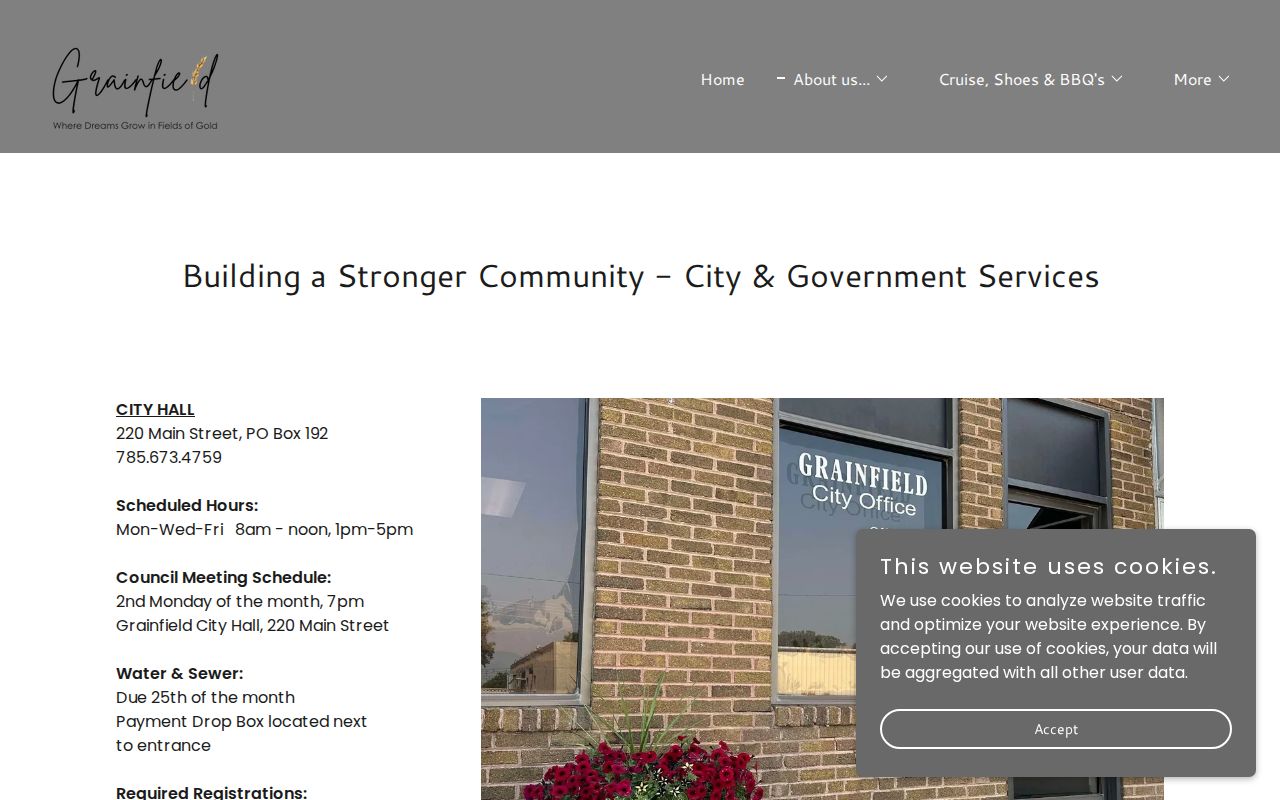
Because Grainfield has no municipal police listing or city roster of its own, every arrest-record request starts with the Sheriff.
Grainfield Arrest and News Sources
Start with official releases. The Kansas Bureau of Investigation published a supported 2025 incident release involving Grainfield, while Hays Post reports major area events as they happen. The weekly Gove County Advocate runs no verified arrest gallery or blotter. For a fuller county media comparison, see Crime News & Mugshots.
RecentlyBooked maintains a Gove page, but it is unofficial and often delayed or empty. Mugshots.com offers a Grainfield filter, though most entries date to 2012–2015. Neither reflects current custody or court outcomes.
Why Grainfield Has Split Records
Three separate stages create Grainfield's split records: county policing, outsourced custody, and court filing. The Sheriff keeps the incident number. The receiving jail assigns a booking number. District Court assigns a case number. Write all three down and never treat them as interchangeable, since that is the surest way to avoid false matches.
Gove County's inmate-housing statement spells out the contract model. Trego and Thomas are known options, but live bed arrangements shift, so ask before assuming. A current roster shows who remains in that facility, not everyone arrested in a given window.
Reading Grainfield Booking Results
A Thomas County result can include a booking number, photo, charges or statute text, bond, arresting agency, date and time, age, sex, and race. Trego cards sometimes carry images too. These are administrative custody facts, nothing more. A later court order can change bond or charges, and release takes the card off view.
- Incident number
- Identifies the law-enforcement event.
- Booking number
- Identifies jail intake.
- Case number
- Identifies filed court proceedings.
- Disposition
- Records the later judicial result.
Sentenced state custody is a different lookup. Use KDOC's KASPER system for that. County rosters and state corrections profiles describe different stages of custody and may even show different photos.
Recent Grainfield Busted Searches
Asking who was arrested yesterday is not the same as checking current custody. Gove County offers no same-day, 24-hour, 48-hour, 72-hour, or weekly booking feed. Trego and Thomas rosters show only people still in their facilities, which leaves out anyone released on bond, transferred, or held elsewhere. The Sheriff's press archive is selective, and the crash log covers crashes alone. Neither one becomes an arrest log just because it carries dates.
For a defined period, request a booking-list or jail-calendar extract from the right custodian. Ask for names, booking dates and times, arresting agencies, booking numbers, charges as entered, and public release or transfer dates. Ask separately whether photos are releasable. A tight date range cuts identity errors, search time, and possible cost. And since no posting delay is documented, make no promises about how fast a fresh Grainfield booking will surface.
After a Grainfield Bust
A booking charge is only the first line in the file. To see what stuck, open the Kansas district-court portal. Narrow the search to Gove County. Check the filing date and case type. When a match comes up, read the complaint or information for the charges actually filed. From there, the register of actions tracks everything else: amendments, dismissals, diversions, pleas, verdicts, and sentences. One caution applies. A dismissal and an acquittal are two different things. If nothing turns up online, the Gove County District Court clerk can help you track it down.
Custody alerts work differently than court records do. Gove links to VINELink, which sends notice when someone in a participating adult county jail is released or transferred. The Sheriff's general SMS and email alerts only announce website updates. They follow no particular person. Kansas VINE leaves out KDOC prisoners. A state-prison sentence points you to KASPER instead, which also shows a corrections profile photo. Neither system carries any legal weight beyond status updates.
Grainfield Booking Photo Limits
Kansas open-records law does not hand over every booking photo. Gove posts no online photo-release policy. The rules stay unclear. A contract roster might show an image even though the receiving jail, not the arresting Sheriff, holds the actual record. Ask which office controls it. If a request gets denied, make them cite the statute. Juvenile, sealed, expunged, and investigative material can all follow different rules entirely.
Fixing a wrong private-site listing takes a paper trail. Start by correcting the originating public record. Document the court's result. Then use only the publisher's free and documented removal route, and once the live source changes, request a search-engine cache refresh. No private page becomes official just because it borrows public-record language, and no paid service can touch the Sheriff's or court's files. Keep copies of everything: the corrected official record, the exact private-page URL, and the publisher's reply. Dates and agency identifiers make each follow-up request point to the same event, not just a similar name.